Whether Magazine 2014-2015
At the end of 2013 Whether Magazine announced they were accepting submissions for their first issue, an exploration of choice, fate, and the absurdity of decision-making. In July of 2015 they announce via Twitter"A Sad Announcement: So Long and Thanks"
The content below is just a small selection from the site's 2013-2015 archived pages.This is a tribute to this delightful online magazine that brought pleasure to many. We will miss you.

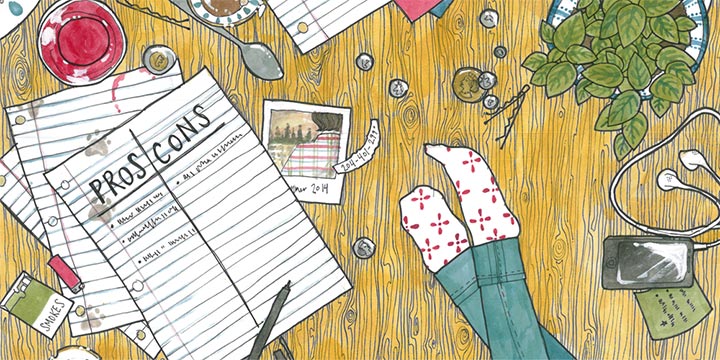
About Whether
Curious, restless, and sincere, Whether is a non-partisan forum where writers and artists can engage with culture, art, politics, philosophy, science, and theology without privileging rigour over beauty or insight over wit.
We start with the assumption that by commenting on culture we are creating it, whether we like it or not. We publish new creative non-fiction, poetry, visual art, short stories, and miscellany every month.
SUMMER
Summer is a time for rest, relaxation, reading, and redesigning. We look forward to seeing you in the fall!
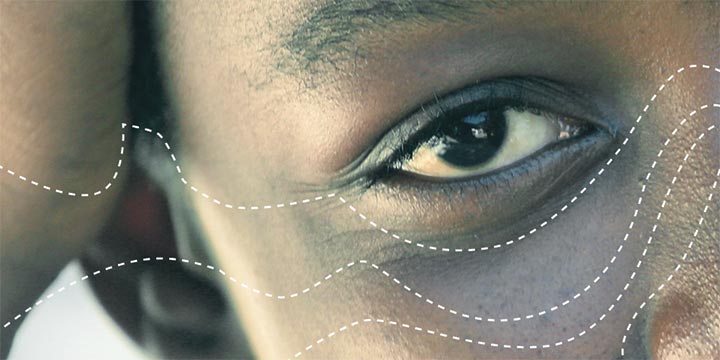
I Do Not Know The Sound Of My Footsteps
NIKOLETTA ERDEYLI • October 8th 2014
Many times I’ve wondered what the sand feels like between the toes, when bare feet rise and fall against its warmth, which hugs the heels as ever so slightly as they slope upward to let the toes fall down. How many times I’ve wondered what it is like to be carried by the charming spell of the high heeled stiletto, that sacred clicking that turns heads, how I’ve wondered what it was to dance the night away on skates, on ice that lets the figure-skaters glide like ballerinas, how I’ve wondered; or what it is like to peddle a bike, to lose control of five-year-old legs, to land on the crack of the pavement beneath me, and scrape the elbows that grow dark scabs, ones I’d pick when my mom wasn’t looking, only to be caught in the act nonetheless.
Or how it is to climb a tree, to fear for my life while sitting on a thick branch, that with the right curse could break beneath me, shattering my bones on cold ground that lands me in a cast, an unfamiliar cast that I know nothing of, surrounded by the walls of a hospital that I’d never seen before, inhaling the unusual scent of rubbing alcohol, spread on self-created wounds.
“The joints in my limbs are more rigid than yours; they lock half-way to their bending capacity.”
How often I’ve wondered what it is like to see a set of stairs as an ordinary feature of the world I live in and not an enemy, how often I’ve wondered just who I would be and with what sort of thoughts, if I didn’t depend on what I depend on – I am happy of course the way that I am, in the frame of my wheelchair with intact sensation and the gift to move, to transfer as I wish, to sit and kneel on countertops, to reach objects beyond my sitting grasp, to roam the streets with undying confidence, to seduce with femininity, tossing and turning with ease beneath the sheets, in the arms of my lover.
It is not that I crave a new existence, or even a pair of new legs, but I’m not immune to wondering sometimes, about movement in another form, one that my body was not designed for. The joints in my limbs are more rigid than yours; they lock half-way to their bending capacity.
“Perhaps it is what compels us to move beyond necessity that counts the most.”
I do not know the sound of my footsteps, yet I move; for movement to me is in the stories we tell in the absence of speech, when the eyes widen with joy on words we read in novels, the way lips part in slow motion when greeted by surprise, the way we are gifted with movement before we’ve escaped the warm walls of a womb to let it be known that we exist; before vocal chords have recognized their power to echo our cry into loving ears across the room who jump at once to our hunger, our discomfort, our need for nurturing.
Perhaps it is what compels us to move beyond necessity that counts the most, the expansion of our lips, curving upward, the aroma of coffee beans, filling our nostrils with comfort, inviting the hands to lift the cup, to let the flavour linger on the taste buds, telling them a new story each morning.
It’s that chaos in the heart of the city, thrilled footsteps echoing the bliss of lunch hour, that momentary, sweet escape from nine-to-five when we are freed from the ringing, buzzing, chirping phone calling our name.
It’s in the movement of the eyes, shifting unstoppably, which make it impossible to feed lies to loved ones, pupils expanding in a beautiful stranger’s company, letting it be vividly known that desire soars within. It’s those invisible butterflies, flapping their wings in the pit of the stomach, dancing away with their tale of a love can’t be measured by reason.
Movement is in the way that the chest expands to excited breathing, and the heart accelerates, pounding from within, synchronized.
What if there’s no such thing as stillness?
Nikoletta Erdelyi is a Communication & Culture student at York University. She's an expert in valuable oriental carpets and their care and if you'd like to know more about this esoteric profession, call when she's on duty. She'll be glad to assist you with your rugs or any fabric floor covering. She likes to people-watch in downtown coffee shops, and lives for expression through writing.
"For me, the most fascinating read in this magazine was the combative interview with Rev Sale over his provocative discourse with a purported maritime attorney based in Louisiana. Rev kept repeating that everything and nothing were intimately related and there was a good argument that nothing existed, only consciousness. The arrogant Louisiana maritime lawyer was dismissive and foolish enough to bring up his website as proof the practice existed. He pointed to the screen and confidently claimed what you saw on the screen was all the proof he needed. He insisted that the magazine provide a link to his site so that their readership could visit and confirm his law practice existed. After listening to the lawyer's rant for a while, Rev pulled the plug on the monitor. Thank you for publishing that post!" Todd Lester
Submissions
Whether Magazine 2015 Call for Submissions
April/May 2015: Want
Want is all about absence, but whether we’re talking about economics or love it never seems to be about emptiness. This spring we look at want both as desire and as lack, as a need and as a failure to meet it.
June/July 2015: Enemies
Ever since our ape ancestors had their first bout of fisticuffs, our enemies have defined us as much as our friends. But in the western world, we’ve long been told that we should love them: what kind of currency does the word have for a divided 21st century world that is striving for unity?
August/September 2015: Cities
In 12th century France they used to say that “city air makes you free.” William Blake imagined them to be a special kind of hell. Cities have always been contradictory and paradoxical: places of refuge and of great danger, full of people and yet lonely. This summer we’re taking on urban life in all its squalid splendour.
October/November 2015: Home
Sentimental and profound, home is one of those words that is always being used to manipulate us. What are the comforts and dangers of home – what, indeed, does it mean to have one? As we settle into autumn, we are going to spend some time at home, with home.
December/January 2015: Relations
In many indigenous cultures in North America, the whole natural world is made up of our relations; historically and in many parts of the world today, one’s relations define every aspect of life. For many modern Westerners, however, relations are simply people to be put up with on the holidays. As the holidays approach, we investigate how (and to whom) we are related.
General Guidelines
Whether accepts submissions year-round. In order to be considered for a specific issue, the submission must be received by the 15th of the preceding month (e.g. a submission intended for the February/March issue must be received by December 15th)
Except in unusual circumstances, we do not accept previously published material.
Text submissions (essays, short-fiction, etc.) should all be sent to managing editor André Forget at [email protected] as .pdf or .doc file attachments. Graphic submissions should be sent to art editor Annalee Giesbrecht at [email protected] as .jpg attachments.
Specific Guidelines
Creative Non-Fiction: We accept non-fiction submission of anywhere from 1500-4000 words and pay $50 per entry.
Fiction: We accept fiction that is within 250-4000 words and pay $50 per entry. One submission at a time, please.
Poetry: 2 lines to 2000. Please send no more than three at a time. We pay $20 for each poem accepted.
Illustrations: 1-5 images, at least one of which is 1000x500px or larger (for use as a header). Please keep in mind that images are displayed at a width of about 500px; small text in very large images may become difficult to read when scaled down. We pay $50 for each total submission.
Video: In addition to textual and graphic content, we also publish filmed monologues, poems, and stories. To submit a film for consideration, it should be filmed in reasonably high-definition (no webcam shots, please), and the content should be original. We pay $50 per video submission.
A Note on Content
Whether Magazine publishes literary essays, short fiction, poetry, interviews, reviews, travelogues, web comics, photography, illustrations, and short film pieces. Though we consider a wide variety of styles and kinds of work, we generally look for pieces that have the following characteristics:
Curious: We are most interested in writing that engage paradox and complexity. While open to arguments, narratives, and images rooted in clear ideological positions, we hope that such writing would take such positions as origins rather than ends.
Critical: Edward Said once noted that “there are good books, and there are less-good books.” It is just as important to talk about less-good books and what makes them inferior as it is to explore what makes the good ones good. We think that this goes for more than just books, but we are also of the opinion that the best criticism comes from a place of vulnerability. A hatchet job should never be just a hatchet job.
Sincere: Irony is great. It can also be rather safe. The best artwork strives to be a genuine act of communication; that being said, sincerity should never be an excuse for sentimentality.
Archives
June 2014
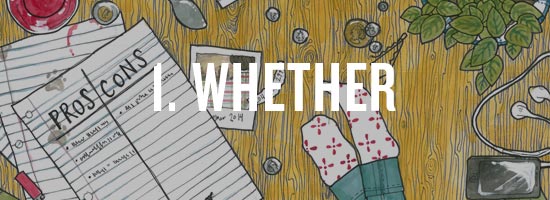
Our very first issue was an exploration of choice, fate, and the absurdity of decision-making. It’s also the name of the magazine.
July 2014
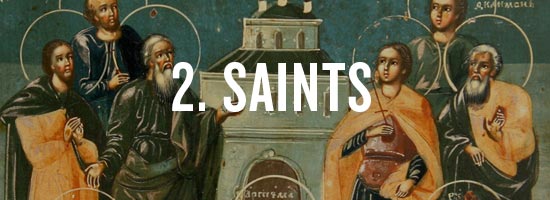
Exploring the problem of the holy person when the distinction between holy and profane, material and the spiritual, is all but invisible.
August 2014
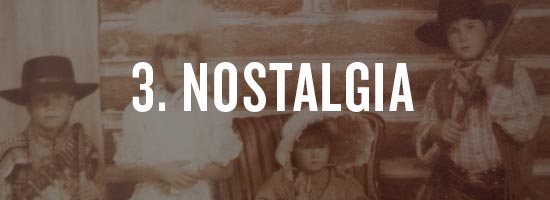
In which we examine the ways in which we look back to what we can never have again.

September 2014
Just in time for Labour Day, all types of work from emotional to physical to biological.
October 2014
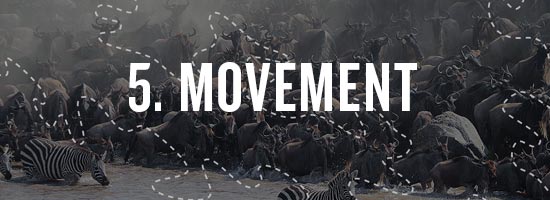
Examining one of the characteristic attributes of living things, whether life-changing or barely perceptible.
Editorial
October 8th 2014
The 17th century was a big one for science. While Galileo was using telescopes in Italy to observe the moon and distant stars, the Royal Society in London was publishing the first ever scientific journal, the straightforwardly-named “Philosophical Transactions of the Royal Society.” In the Netherlands, newfangled microscopes consisting of miniscule glass balls mounted between two plates of wood or metal were all the rage. They were finicky to use, but once one got the hang of them, an entire tiny universe was open to discovery. A scientifically untrained draper by the name of Anton van Leeuwenhoek acquired some fame using these microscopes to observe mysterious “globules” moving through living matter. At the suggestion of a colleague he began examining bodily fluids, one thing led to another, and soon enough he found himself poring naked over a microscope, marvelling at the lashing, snake-like movements of mysterious “animalcules” in a fresh sample of his own semen. One can only imagine his wife’s reaction.
“Leeuwenhoek subscribed to the whimsical and terrifying idea that there was a fully formed little human inside each sperm cell.”
At that time, there was hot debate over where exactly babies came from. The general idea was understood, sure, but the finer details of the process were still a little foggy. Leeuwenhoek’s discovery of what we now know are sperm cells did not immediately clear things up, as Leeuwenhoek subscribed to the whimsical and terrifying idea that there was a fully formed little human inside each sperm cell simply waiting to be nourished by the female egg. Egg cells, since they appeared to be immobile, seemed to Leeuwenhoek an unlikely source of life. He wrote of his discovery, “Surely no one will question that an animate creature, however small it may be in the womb where it is nourished, is endowed with a living soul.”
We now know that he was super wrong about that, and can feel justifiably offended both by his erasure of women’s role in producing life and by his shortcomings as a lover. But Leeuwenhoek was far from alone in equating movement with life. This tendency still exists in the English language: living things are “animate:” possessing the quality of movement. We used to use the word “quick” to mean alive, “endowed with a living soul,” as Leeuwenhoek might say; now it describes swift movement, the sort of movement generally characteristic of the living.
“The word ‘quick’ now describes swift movement, the sort of movement generally characteristic of the living.”
The capacity for movement is one of the most fundamental characteristics of life, but it can take many forms. Some movements are so minute they can only be observed through a microscope over a long period of time; some animal migrations are so massive they can only be seen in their entirety from the air. In this issue of Whether, we take a look at this wide variety of movement and the role it plays in our experiences of being alive.
For Brandon Bertram,the rush of an urban bike race creates a space for socialising; Nikoletta Erdeyli’s restricted movement allows her to appreciate the subtle motions of the day-to-day. Daniel Hayes explores linear and circular movement in early French cinema, and Tom Vaine offers a meditation about the physical, intellectual, and emotional challenges of moving from his hometown to the big city for university. Michael Crummey’s Sweetland, reviewed by Andre Forget, addresses some of the consequences of rural-to-urban migration in Newfoundland while Josh Cleminson illustrates another sort of human migration. The slow crawl of a glacier and the quick flash of lightning coexist in Maggie Helwig’s poem The Burnt Lands,presented here as a video reading. We hope you enjoy these reflections on movement, motion, and change, and challenge you to work the word “quick,” in its original sense, into your daily conversation at least once this week.
The Editor
About the Editors
André, Maria, Adam, and Annalee met while living in Winnipeg, Manitoba, and now run Whether from their homes in Winnipeg, Toronto, and New York.
+++
André Forget
André Forget did his MA in English Literature at Dalhousie University and works as a staff writer and social media lead for the Anglican Journal in Toronto. His writing has appeared in The Dalhousie Review, The Town Crier, and The Winnipeg Review. [email protected] & @ayforget
Maria Bowler
Maria Bowler recently completed her MA in Religion at Yale. She lives in New York City. [email protected] & @mariaevb
Adam Klassen
Adam studied English Literature and History at Canadian Mennonite University. He lives in Winnipeg where he has worked as a baker, a co-ordinator of a prison visitation program, and an occasional freelancer. [email protected] &
Annalee Giesbrecht
Annalee Giesbrecht studied graphic design at Red River College and is currently working as a freelance designer. Previously she studied English Literature at Canadian Mennonite University. [email protected] & < >@giesygies
More Background On WhetherMagazine.com
WhetherMagazine.com was an independent, web-based literary and cultural magazine that emerged in the early 2010s as part of a broader resurgence of small, digitally native journals devoted to long-form thought, experimental criticism, and cross-disciplinary art. Active primarily between 2013 and 2015, the site functioned as a curated forum for essays, poetry, interviews, visual art, criticism, and short fiction that resisted strict genre boundaries and ideological dogmatism.
Unlike many online publications that sought rapid growth or mass visibility, Whether Magazine positioned itself deliberately as a slow, reflective publication—one that treated cultural commentary as a creative act in its own right. Its name, “Whether,” captured both its thematic ambiguity and its editorial philosophy: a sustained interest in uncertainty, paradox, and the unresolved tensions of modern life.
Though its lifespan was relatively brief, WhetherMagazine.com left a lasting impression on contributors, readers, and fellow editors within literary and academic circles, and today it persists as a meaningful artifact of early-21st-century independent publishing.
Founding Context and Editorial Vision
Whether Magazine was founded in the early 2010s by a small editorial collective based primarily in Canada and the northeastern United States. The magazine came into being at a moment when traditional print journals were contracting, while online platforms were rapidly expanding—often prioritizing speed, opinion, and algorithmic visibility over depth or literary craft.
Against this backdrop, Whether Magazine articulated a distinct editorial stance. It rejected rigid disciplinary silos and welcomed writing that moved fluidly among culture, politics, philosophy, theology, science, and art. The editors emphasized that cultural criticism was never neutral: to write about culture was to participate in its creation.
Crucially, the publication resisted the common digital dichotomy between rigor and beauty. Rather than privileging academic detachment or journalistic immediacy, Whether sought work that combined intellectual seriousness with stylistic experimentation, emotional vulnerability, and formal elegance.
Ownership and Editorial Leadership
WhetherMagazine.com was independently owned and operated by its editorial team, without corporate backing or institutional sponsorship. This independence shaped both its tone and its limitations.
The editorial collective included:
-
André Forget, a writer and editor with a background in English literature and journalism, who served as managing editor and a central intellectual voice of the magazine.
-
Maria Bowler, whose academic training in religion informed the magazine’s engagement with theology, ethics, and belief systems.
-
Adam Klassen, whose work bridged literature, history, and social reflection.
-
Annalee Giesbrecht, who served as art editor and designer, shaping the magazine’s clean, restrained visual identity.
The editors were geographically dispersed, working from cities including Winnipeg, Toronto, and New York, which contributed to the magazine’s transnational sensibility and resistance to parochialism.
Format, Design, and User Experience
WhetherMagazine.com adopted a minimalist design that emphasized readability and focus. The website avoided visual clutter, intrusive advertising, and aggressive navigation schemes. Typography and layout were treated as integral components of the reading experience rather than as afterthoughts.
Articles were typically presented without distractions, encouraging sustained engagement rather than skimming. This design philosophy aligned with the magazine’s broader rejection of attention-economy norms and its commitment to slow reading.
The site also functioned as an archive, with issues organized thematically rather than chronologically, reinforcing the idea that each issue constituted a conceptual inquiry rather than a news cycle.
Thematic Issues and Editorial Structure
Rather than publishing loosely themed content, Whether Magazine organized its work around explicitly defined thematic issues, each spanning several months. These themes were deliberately open-ended, allowing contributors to approach them from multiple angles and disciplines.
Notable issue themes included:
-
Choice and decision-making
-
Holiness and the sacred
-
Memory and loss
-
Work and labor
-
Movement and change
-
Desire and absence
-
Enmity and conflict
-
Urban life
-
Home and belonging
-
Relations and kinship
Each theme functioned as a prompt rather than a constraint, inviting contributors to interrogate cultural assumptions, personal experiences, and historical narratives.
Types of Content Published
WhetherMagazine.com published a wide range of creative and critical work, including:
-
Creative non-fiction essays, often blending memoir, philosophy, and cultural analysis
-
Short fiction, frequently experimental in form
-
Poetry, ranging from minimalist lyric to extended meditative pieces
-
Interviews, particularly with thinkers, writers, and cultural figures
-
Book and film criticism, emphasizing interpretive depth over consumer guidance
-
Visual art and illustration
-
Short films and recorded readings, an uncommon feature among literary journals of the period
This diversity reflected the magazine’s belief that no single mode of expression could adequately capture contemporary experience.
Submission Model and Contributor Community
Whether Magazine accepted submissions on a rolling basis, with specific deadlines tied to upcoming thematic issues. Unlike many small journals, it paid contributors, offering modest but meaningful honoraria for accepted work.
Payment categories included:
-
Essays and fiction
-
Poetry
-
Visual art and illustration
-
Video and multimedia submissions
This commitment to compensating artists underscored the editors’ belief that creative labor deserved material recognition, even within financially constrained independent publishing.
Contributors ranged from graduate students and emerging writers to established academics, critics, and artists. Many were affiliated with universities, creative writing programs, or cultural institutions, giving the magazine a distinct intellectual texture without becoming insular.
Cultural and Social Significance
WhetherMagazine.com occupied a unique cultural space between academia, literary publishing, and independent media. It did not attempt to translate scholarship for a mass audience, nor did it chase viral relevance. Instead, it modeled an alternative vision of digital culture: one rooted in thoughtfulness, patience, and interpretive generosity.
In this sense, Whether belonged to a lineage of small magazines that have historically shaped intellectual life disproportionate to their size. Its influence was less visible in metrics than in the way its essays circulated through classrooms, reading groups, and informal intellectual networks.
The magazine also contributed to ongoing conversations about accessibility, embodiment, belief, and identity, often foregrounding voices and perspectives overlooked by mainstream outlets.
Reception and Reader Response
Although Whether Magazine never pursued large-scale marketing, it developed a devoted readership. Reader responses, letters, and informal testimonials frequently highlighted the magazine’s emotional resonance and intellectual daring.
Many readers described encountering pieces that articulated experiences or questions they had not previously seen addressed with such care. The magazine’s refusal to simplify complex topics—religion, disability, desire, power—was often cited as one of its greatest strengths.
Within literary circles, Whether was recognized as a serious but approachable publication, one that balanced editorial rigor with openness to experimentation.
Press, Academic, and Informal Recognition
While Whether Magazine did not receive major mainstream press coverage, it was frequently cited and shared within:
-
University syllabi
-
Independent reading lists
-
Writing workshops and seminars
-
Online literary communities
Several contributors later referenced their work for Whether as formative in their development as writers or thinkers. In this way, the magazine functioned as an incubator for voices that would go on to publish in other respected venues.
Archival Status and Closure
In mid-2015, the editors announced that Whether Magazine would cease publication. The decision was framed not as a failure but as a recognition of the limits imposed by time, labor, and sustainability.
The site was preserved in part through web archives, allowing later readers to revisit its essays and artistic contributions. These archived pages now serve as a snapshot of a particular intellectual moment—one defined by uncertainty, ethical inquiry, and resistance to cultural acceleration.
Legacy and Continuing Relevance
Today, WhetherMagazine.com is best understood as a completed project rather than a dormant one. Its significance lies not in longevity but in coherence: a clearly articulated editorial vision sustained over a finite but meaningful period.
For contemporary readers and editors, Whether offers several enduring lessons:
-
That digital publishing can prioritize depth over scale
-
That interdisciplinary thinking enriches cultural criticism
-
That uncertainty and ambiguity are not weaknesses but intellectual virtues
-
That small publications can foster genuine community and influence
In an era increasingly shaped by algorithmic incentives, Whether Magazine stands as a reminder that another model is possible—one in which writing is not content, and reading is not consumption, but both are acts of shared inquiry.
WhetherMagazine.com was not merely a website but a carefully curated intellectual space. Through its essays, art, and editorial stance, it demonstrated how online publishing could function as a form of cultural stewardship rather than content production.
Though its active years were brief, its archive continues to reward attentive readers. Whether Magazine remains a testament to the enduring value of independent thought, creative risk, and the belief that culture is something we make together—whether we like it or not.